PIPE MAINTENANCE
Since oil and gas pipelines are critical assets for the economic development of nearly every country, ensuring their safety is a top priority. Governments and organizations, including KP Mahamanou Oil & Gas Limited, adhere to stringent regulations and internal policies to safeguard these infrastructures, as well as the populations and environments through which they pass.
To mitigate these risks, KP Mahamanou Oil & Gas Limited implements comprehensive safety measures, including regular inspections, advanced monitoring systems, and preventive maintenance programs. The company utilizes cutting-edge technologies such as smart pigging, remote sensing, and real-time data analytics to detect potential issues early and respond swiftly. Additionally, robust emergency response plans are in place to address any incidents promptly and minimize their impact.
Environmental protection is a key focus, with measures such as pipeline routing to avoid ecologically sensitive areas, leak detection systems, and spill containment strategies. KP Mahamanou Oil & Gas Limited also engages with local communities to raise awareness about pipeline safety and ensure transparency in its operations. By prioritizing safety, environmental stewardship, and community well-being, the company plays a vital role in maintaining the integrity of oil and gas pipelines while supporting sustainable economic growth.
Pipelines are critical infrastructure for the transportation of oil and gas, and their safe operation is essential for economic development, environmental protection, and public safety. For instance, in the State of Washington, pipeline operators are required to detect and locate leaks of 8% of maximum flow within 15 minutes or less. Social factors, such as product theft, further complicate pipeline operations, necessitating even more sensitive detection systems capable of identifying leaks under 2% of maximum flow with high location accuracy. KP Mahamanou Oil & Gas Limited adheres to these stringent requirements, employing advanced technologies and strategies to ensure pipeline integrity and security.
Monitoring Technologies and Strategies
A variety of technologies are used to monitor pipelines, ranging from physical inspections to satellite surveillance. One of the most widely used methods is Computational Pipeline Monitoring (CPM), which analyzes data on pressures, flows, and temperatures to estimate the hydraulic behavior of the transported product. By comparing these estimates with field data, CPM can detect anomalies or unexpected situations, such as leaks. KP Mahamanou Oil & Gas Limited leverages CPM systems to enhance leak detection capabilities and ensure rapid response to potential issues.
The American Petroleum Institute (API) has published key guidelines to improve pipeline monitoring, including:
API 1130: Computational Pipeline Monitoring for Liquids Pipelines
API 1149: Pipeline Variable Uncertainties and Their Effects on Leak Detectability
These publications provide valuable insights into optimizing CPM systems, and KP Mahamanou Oil & Gas Limited integrates these best practices into its operations.
Protective Measures
Where pipelines pass under roads or railways, they are typically encased in protective casings. These casings are vented to the atmosphere to prevent the accumulation of flammable gases or corrosive substances. The vents also allow for air sampling to detect leaks and often serve as visible warning markers, known as casing vent markers.
Pipeline Implementation
Pipelines are generally laid underground to minimize temperature fluctuations, which can cause metal pipelines to expand or contract. However, in certain situations, such as crossing valleys, rivers, or permafrost regions, pipelines may be constructed above ground. For example, the Trans-Alaska Pipeline runs overhead in permafrost areas to prevent the hot petroleum from melting the frozen ground, which could cause the pipeline to sink. Similarly, centralized heating system pipelines are often laid on the ground or overhead for practical reasons.
Maintenance Practices
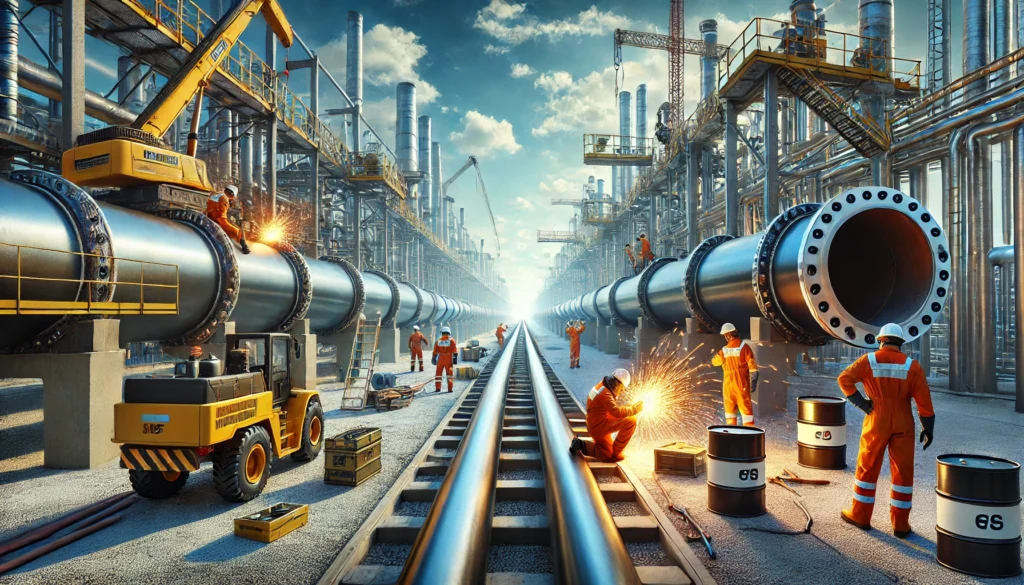
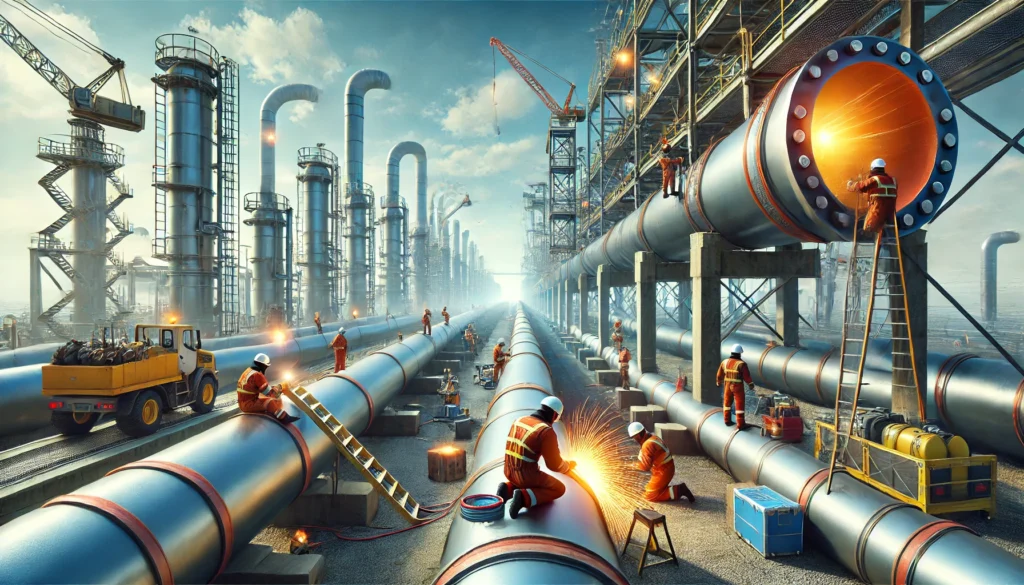
Regular maintenance is crucial for pipeline safety and longevity. KP Mahamanou Oil & Gas Limited implements comprehensive maintenance programs, including:
Monitoring cathodic protection levels to prevent corrosion.
Conducting surveillance for construction activities, erosion, or leaks using foot patrols, land vehicles, boats, or aircraft.
Running cleaning pigs through the pipeline to remove corrosive substances or debris.
By combining advanced monitoring technologies, protective measures, and rigorous maintenance practices, KP Mahamanou Oil & Gas Limited ensures the safe and efficient operation of its pipelines. This commitment to safety and sustainability underscores the company’s dedication to protecting both its assets and the communities and environments it serves.